Opening Scene
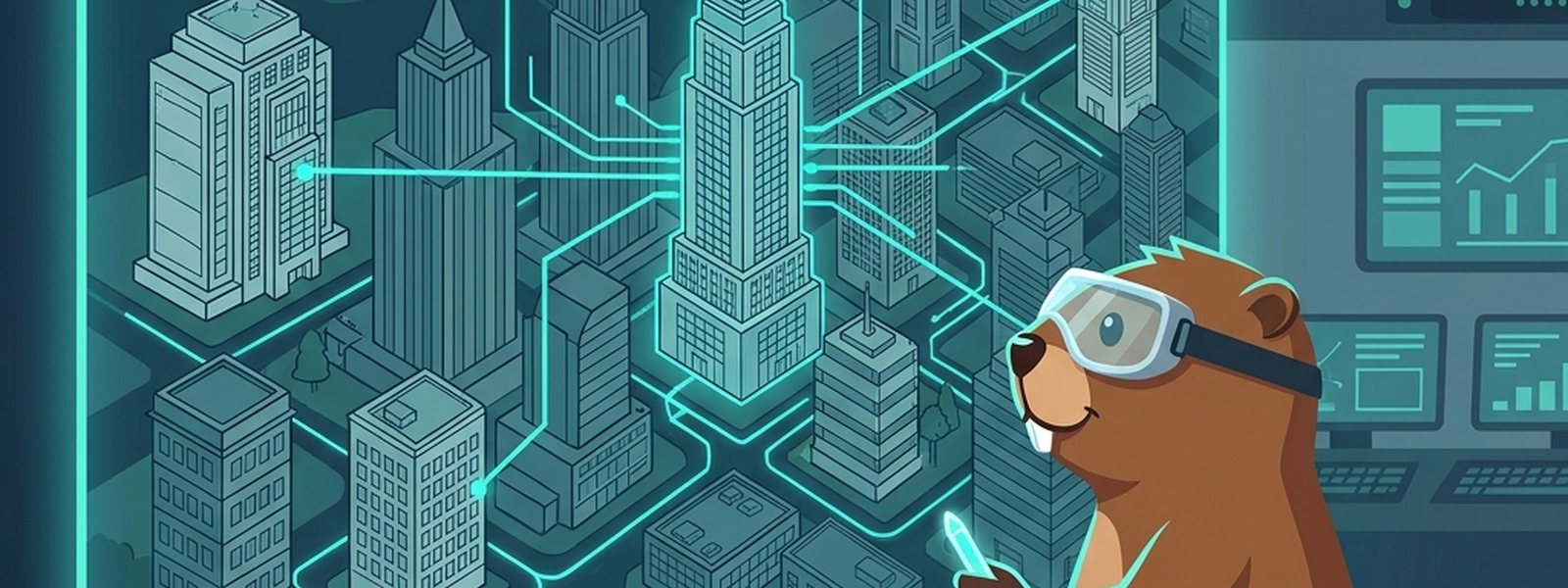
A single contractor reviewing one building’s renovation plans can catch problems specific to that building. A contractor who could somehow hold every building’s blueprint in the entire city in mind simultaneously — cross-referencing shared utility lines, adjacent structural dependencies, citywide zoning implications — would catch a genuinely different category of problem, ones invisible from any single building’s perspective alone.
AI-assisted schema change impact analysis operates at this exact same citywide scale.
In Plain English
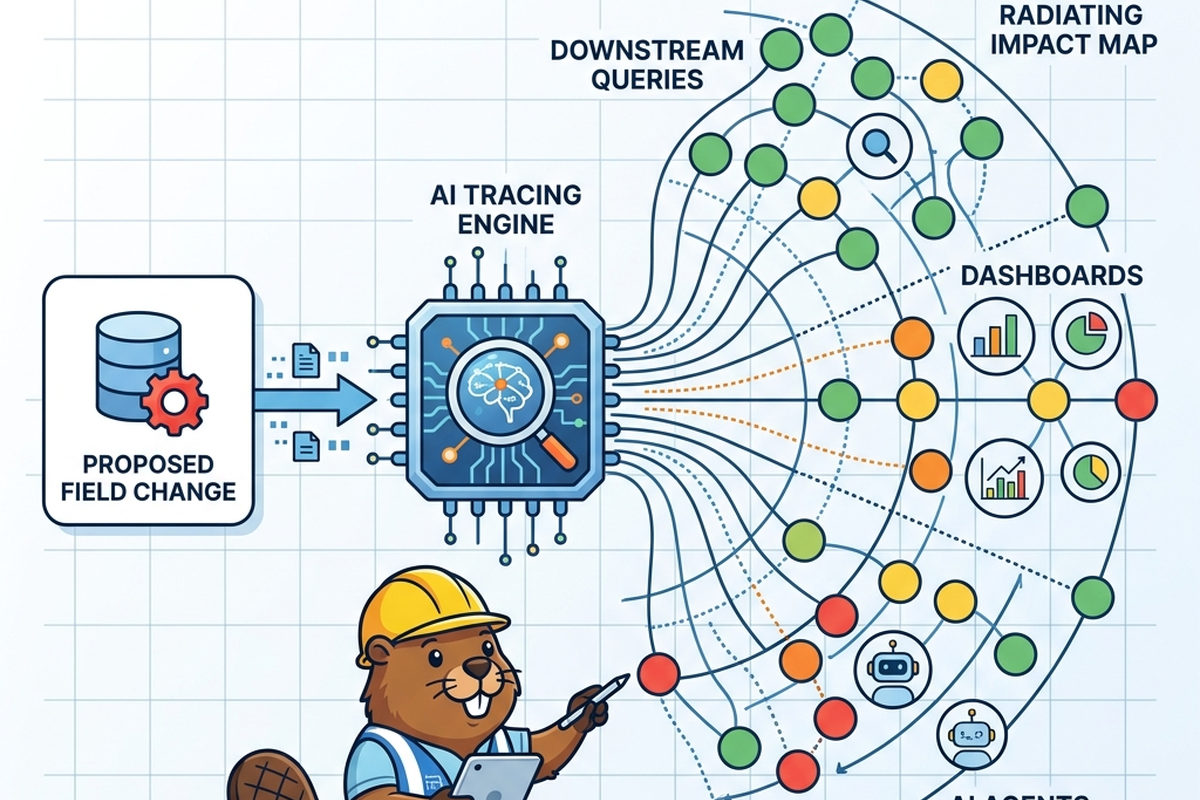
AI-assisted schema change impact analysis doesn’t just check a single proposed change against a single schema’s known consumers — it can analyze a change’s ripple effects across an entire organization’s schemas, queries, dashboards, and AI-generated content simultaneously, catching downstream impacts that would be genuinely invisible to any single team reviewing their own change in isolation.
The Old Way
Before this kind of comprehensive, cross-cutting analysis was possible, schema change impact assessment was necessarily limited to what a single team or reviewer could directly see:
- A team proposing a schema change could only reasonably check the consumers they knew about, similar to a single contractor only being able to review the one building directly in front of them.
- Impacts on distant, indirect consumers — a dashboard three transformations removed, an AI system trained on data that includes the changed field — were often invisible until something broke downstream, sometimes long after the original change shipped.
- This limited visibility meant genuinely comprehensive impact analysis required either a prohibitively large manual effort, or was simply accepted as impractical and skipped.
This structurally limited visibility is precisely what AI-assisted, organization-wide impact analysis was built to overcome.
What’s Changing (and Why AI Is the Reason)
- AI-assisted impact analysis can trace a proposed schema change’s effects through the full chain of downstream transformations, dashboards, reports, and even AI systems that consume the affected data, surfacing impacts that would be genuinely invisible to a team only checking their immediate, known consumers. This directly extends every dependency-tracing capability introduced throughout this arc — Articles 12, 14, and 18 — to its fullest, organization-wide scope.
- This comprehensive analysis can run automatically and continuously, rather than requiring a prohibitively large manual effort each time, making genuinely comprehensive impact assessment practical for the first time rather than an ideal teams simply accepted as unreachable. This turns a theoretical best practice into an actually achievable one.
- AI-assisted impact analysis can also flag not just direct breakage, but subtler downstream effects — a dashboard’s numbers shifting because an upstream field’s meaning changed even though its type didn’t — catching a category of problem that purely mechanical, type-based checking would miss entirely. This closes a genuine gap between “technically compatible” and “actually still correct,” a distinction every other article in this arc has depended on without always being able to fully verify it.
The Metaphor, Fully Extended
| Building Element | Comprehensive Impact Analysis Concept |
|---|---|
| A contractor reviewing only the one building directly in front of them | A team checking a schema change only against consumers they personally know about |
| A contractor who could somehow hold every building’s blueprint in mind simultaneously | AI-assisted impact analysis tracing effects across an entire organization’s schemas and systems |
| A shared utility line problem invisible from any single building’s perspective | A downstream dashboard or AI system impact invisible to a team checking only their known consumers |
| An impractical, prohibitively large manual effort to check every building in the city | The prohibitive manual cost of genuinely comprehensive impact analysis before automation |
| Noticing a building’s function has quietly changed even though its structure technically didn’t | Catching a downstream meaning shift even when a schema’s type technically remains compatible |
For Beginners: What to Actually Do
- Recognize that your own visibility into a schema change’s true impact is genuinely limited to what you personally know about — that’s not a personal failing, it’s a structural limit worth compensating for.
- Use AI-assisted, organization-wide impact analysis specifically to catch the downstream consumers you wouldn’t otherwise know to check.
- Pay attention to flagged “meaning shift” impacts, not just type-level breakage — these are often the more consequential, subtler category of problem.
- Notice that this capability is what makes every discipline covered earlier in this arc genuinely comprehensive, rather than limited to what a single team can see.
For Practitioners and Leaders: The Deeper Layer
- Invest in AI-assisted, organization-wide schema change impact analysis as a genuine capability upgrade, not just a convenience — it closes a structural visibility gap manual review could never fully close.
- Run comprehensive impact analysis continuously and automatically, rather than treating it as a large, occasional manual effort.
- Pay particular attention to flagged meaning-shift impacts, since these represent a category of risk that purely mechanical compatibility checking has always missed.
- Recognize this capability as the culmination of every dependency-tracing discipline introduced throughout this arc, now operating at genuinely comprehensive, organization-wide scale.
Quick Recap
- AI-assisted schema change impact analysis can trace a proposed change’s effects across an entire organization’s schemas, dashboards, and AI systems simultaneously, not just a team’s known consumers.
- This directly parallels a contractor who could hold every building’s blueprint in the city in mind at once, catching problems invisible from any single building’s perspective.
- This comprehensive analysis can now run automatically and continuously, making genuinely comprehensive impact assessment practical for the first time.
- It also catches subtler meaning-shift impacts that purely mechanical, type-based compatibility checking would miss entirely.
Where This Fits in the Series
Article 18 covered schema evolution across a city of many boroughs. This article covered the contractor who reads every blueprint at once — comprehensive AI-assisted impact analysis. Article 20 closes this extended arc, and the whole series, by bringing every article’s lesson back together at one city, still being built on.
Subscribe to the Newsletter
Get the latest DataParables articles delivered straight to your inbox.