Opening Scene
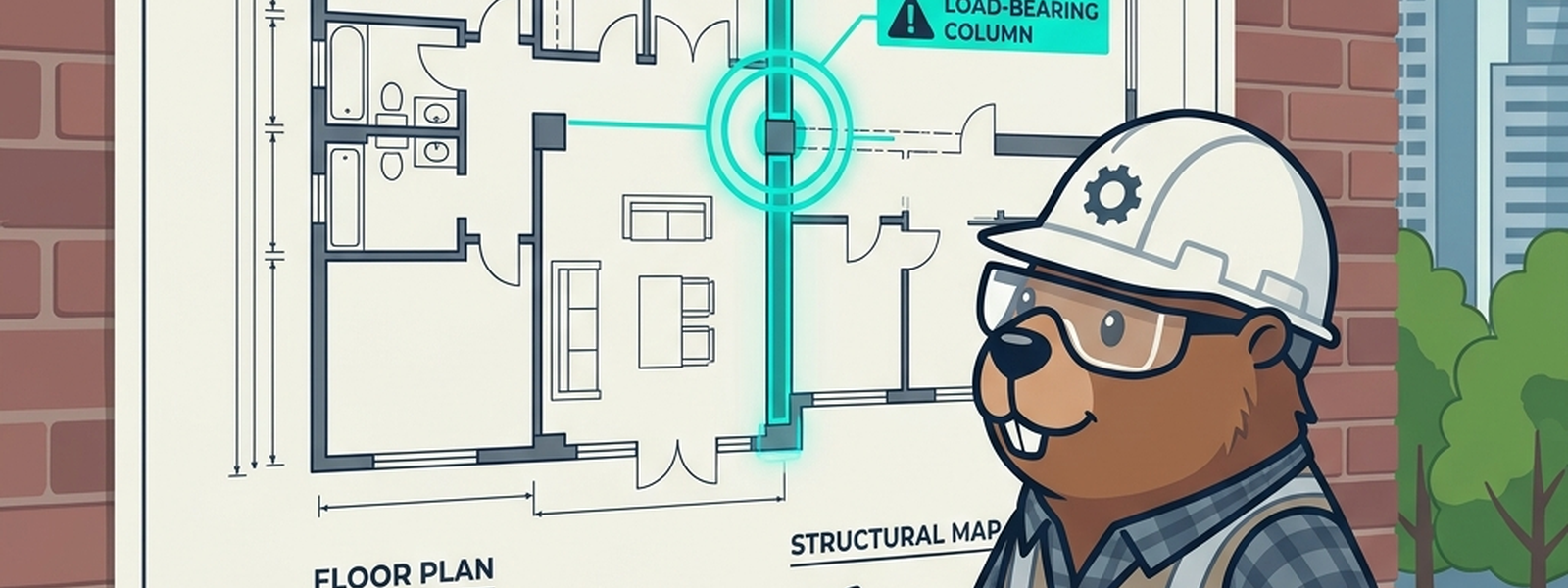
Before a contractor touches any wall in a renovation, they check the structural drawings to see which walls are load-bearing and which are just partitions. A partition wall can come down with a sledgehammer and an afternoon. A load-bearing wall, touched carelessly, can bring the floor above down with it. The wall itself doesn’t announce which kind it is — you have to actually check.
Identifying breaking schema changes requires this exact same deliberate check.
In Plain English
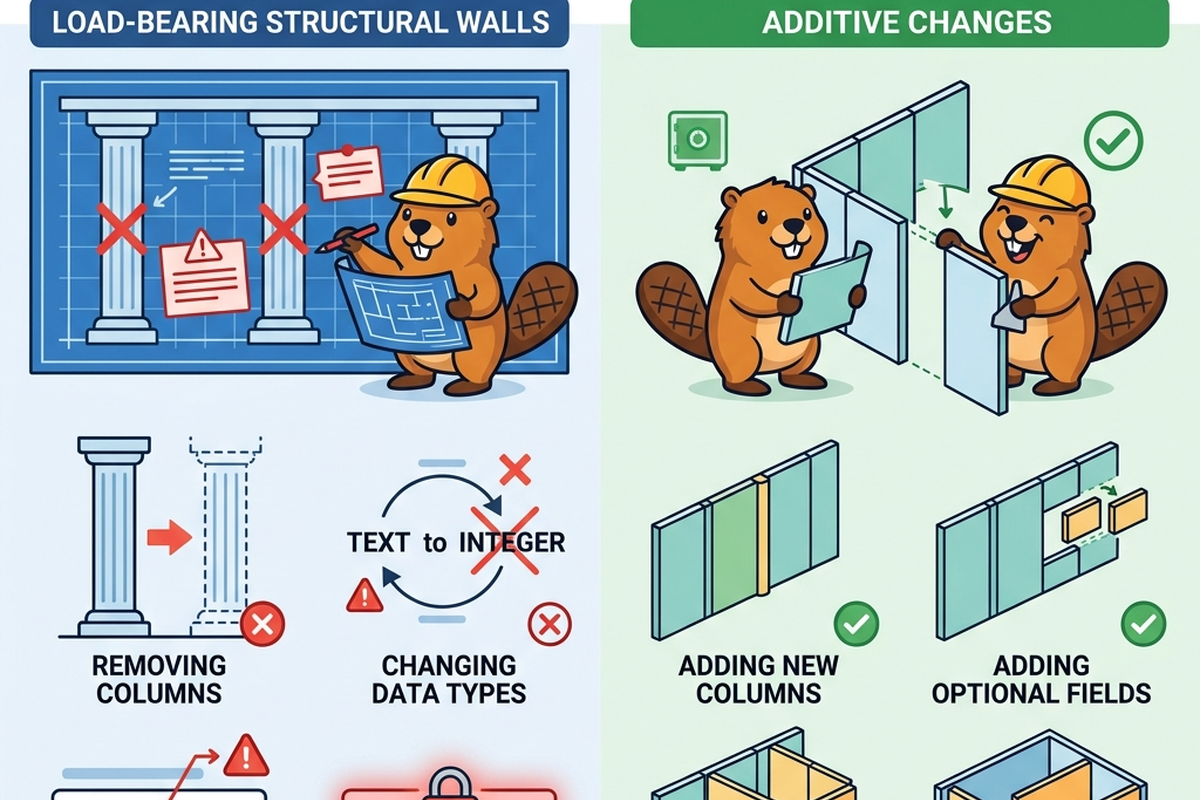
A breaking change — removing a column, renaming a field, changing a type, making an optional field required — alters or removes something existing consumers already depend on, and will genuinely break them if shipped without careful coordination. Correctly identifying which specific changes are breaking, as distinct from the additive changes covered in Article 11, is the core diagnostic skill schema evolution depends on.
The Old Way
Before this distinction was treated with real rigor, breaking changes were often discovered the hard way:
- A change that looked minor on the surface — renaming a field, tightening a type — sometimes broke downstream consumers in ways nobody anticipated until production, similar to a wall coming down and the floor above sagging unexpectedly.
- Teams without a systematic way to check a change’s actual structural role sometimes relied on individual memory or tribal knowledge about which parts of a schema were safe to touch, knowledge that didn’t transfer reliably as people moved on.
- Post-incident reviews after a breaking change shipped often revealed the breakage was actually predictable, if only someone had systematically checked which consumers depended on the specific field being changed.
This reliance on memory and after-the-fact discovery is precisely what systematic breaking-change identification was built to replace.
What’s Changing (and Why AI Is the Reason)
- AI-assisted dependency analysis can now trace which specific downstream consumers — queries, applications, other schemas — actually depend on a given field, producing something like a structural drawing showing exactly which walls are load-bearing before anyone touches them. This directly extends the change-impact tracing introduced in Article 7, now applied specifically and systematically to breaking-change identification.
- This traced dependency information lets a team see, before a change ships, precisely who would be affected and how, replacing guesswork with a concrete, checkable list. This turns “will this break something?” from an anxious guess into an answerable question.
- AI-assisted breaking-change classification can now catch subtle cases — a type widening that looks safe but actually changes serialization behavior, a rename that looks cosmetic but breaks a downstream join — that a purely manual review might miss. This closes a genuine gap where “obviously safe” changes turn out to be quietly breaking after all.
The Metaphor, Fully Extended
| Building Element | Breaking Change Concept |
|---|---|
| A load-bearing wall, structurally critical to the building | A schema element genuinely depended on by existing consumers |
| A partition wall, safe to remove without structural consequence | A schema element with no real downstream dependency |
| Structural drawings showing exactly which walls carry weight | Traced dependency analysis showing exactly which consumers depend on a field |
| A wall coming down and the floor above unexpectedly sagging | A change shipping and breaking a downstream consumer nobody had checked |
| A structural engineer’s careful, systematic review before any load-bearing change | Careful, coordinated review specifically for identified breaking changes |
For Beginners: What to Actually Do
- Treat “does this change break anything?” as a question with a checkable answer, not a guess based on memory.
- Learn the common categories of breaking change — removals, renames, type changes, tightened constraints — and check for them explicitly.
- Use AI-assisted dependency analysis to see who actually depends on a field before assuming a change is safe.
- Notice that subtle breaking changes, like a type widening with serialization consequences, are often more dangerous than obvious ones precisely because they look safe.
For Practitioners and Leaders: The Deeper Layer
- Invest in dependency tracing infrastructure that can answer “who depends on this field?” concretely, rather than relying on individual memory or tribal knowledge.
- Use AI-assisted breaking-change classification to catch subtle cases a manual review might miss.
- Build post-incident review specifically around whether a breaking change’s impact was actually predictable in hindsight, and close that gap for next time.
- Treat this diagnostic skill as the foundation the rest of this schema evolution arc’s versioning and migration practices depend on.
Quick Recap
- Breaking changes alter or remove something existing consumers depend on, and require careful, coordinated handling, unlike the additive changes covered in Article 11.
- This directly parallels checking structural drawings before touching any wall in a renovation.
- AI-assisted dependency analysis can now trace exactly which consumers depend on a given field, turning guesswork into a checkable answer.
- Subtle breaking changes, ones that look safe on the surface, are often the most dangerous precisely because they evade casual review.
Where This Fits in the Series
Article 11 covered additive changes, the low-risk category. This article covered identifying breaking changes, the load-bearing walls of a schema. Article 13 looks at the plaque on the cornerstone — schema versioning itself.
Subscribe to the Newsletter
Get the latest DataParables articles delivered straight to your inbox.